


 Carli Clesmere
 Bergen County’s history runs deep, and Black residents, communities, activists, educators, and preservationists have shaped that story for generations. From early African American communities in Paramus to Civil Rights organizing in Teaneck and Englewood, the county is home to landmarks, people, and moments that shaped New Jersey history. As Juneteenth continues to be recognized across the country, it’s also a meaningful time to look closer to home. Bergen County’s Black history includes stories of enslavement, freedom, education, activism, preservation, and community-building. Read on for a look at some notable Black history moments, people, and places in Bergen County.
A Note on Juneteenth
Juneteenth is observed on June 19th and commemorates the day in 1865 when enslaved Black people in Galveston, Texas, were informed of their freedom. The holiday became a federal holiday in 2021, and New Jersey observes Juneteenth as a state holiday on the third Friday in June. While Juneteenth is rooted in Texas history, its meaning is connected to the country as a whole, including New Jersey. The Garden State has its own complicated history with slavery and abolition, and Bergen County played a significant role in that past.
Gethsemane Cemetery | 35 Summit Place, Little Ferry
Gethsemane Cemetery in Little Ferry is one of Bergen County’s most important Black history landmarks. Per Bergen County’s guide to the site, the cemetery was used from 1860 through about 1924, primarily by the African American communities of Little Ferry and Hackensack. The cemetery is believed to be the final resting place of more than 500 people, including formerly enslaved residents and Civil War veterans. Per Bergen County, Gethsemane was added to the New Jersey and National Registers of Historic Places in 1994 because of its role in New Jersey’s early civil rights history and its evidence of West African burial customs.
Today, the site is maintained by Bergen County and serves as a powerful reminder of the Black residents whose lives helped shape the region.
Read More: Fort Lee, NJ: The Birthplace of American Film + Its Hollywood History


Dunkerhook + The Zabriskie Tenant House | 421 Franklin Ave, Wyckoff
Dunkerhook, located near the Paramus and Fair Lawn area, was once home to a 19th-century free Black community. Per Preservation New Jersey, the area developed along Dunkerhook Road and was connected to free African American families, an AME-Zion church, and a cemetery.
The Zabriskie Tenant House was one of the last surviving structures tied to this historic community before it was demolished in 2012. Though the house no longer stands, Dunkerhook remains an important piece of Bergen County’s Black history and is recognized through New Jersey’s Black Heritage Trail.
Remembering the Freedmen of Closter Mountain | Alpine
Remembering the Freedmen of Closter Mountain in Alpine recognizes the lives of Black residents and freed people connected to the Palisades region, including those whose labor, families, and communities were part of the area’s development. Alpine is also connected to Bergen County’s Black heritage through Remembering the Freedmen of Closter Mountain. Per the New Jersey Historical Commission, this site is part of the New Jersey Black Heritage Trail, which highlights places connected to Black life, history, and resilience across the state. The Closter Mountain story helps bring visibility to Black residents and freed people connected to the Palisades region. It is also a reminder that Bergen County’s Black history is tied to land, labor, family, and community.
Teaneck + School Integration
Teaneck holds a major place in Civil Rights history. In the 1960s, the township became nationally known for its school integration efforts. Per historical accounts of Teaneck’s desegregation, the township became one of the first communities in the United States to voluntarily integrate its public schools through a vote.

A key figure in that work was Theodora Smiley Lacey, a teacher, activist, and longtime Teaneck resident. Lacey had previously been involved in the Montgomery Bus Boycott before moving to New Jersey. In Bergen County, she became a leading voice in efforts around school integration and fair housing. In 2020, Teaneck Public Schools opened the Theodora Smiley Lacey School in her honor, recognizing her lasting impact on the township and the broader Civil Rights Movement.
See More: LGBTQ+-Owned Businesses to Support in Bergen County
Englewood’s Civil Rights History
Englewood also has a deep Civil Rights history, especially around schools, housing, and voting. Per the Black Women’s Mural project, Englewood’s Fourth Ward became a strong Black community as African Americans moved north during the Great Migration. The city was also the site of major activism. In 1952, civil rights leader Mary McLeod Bethune was initially barred from speaking at a local school during a Cold War-era controversy. Per Englewood Makes History, the incident became a national civil liberties issue and reflected how race, politics, and public education intersected in Northern communities. Englewood was also home to student-led activism in the 1960s. Per Englewood Public School District, the 1963 Cleveland Elementary School sit-ins helped push efforts toward school desegregation in the city.
Black Women’s Mural | Downtown Englewood
View this post on Instagram
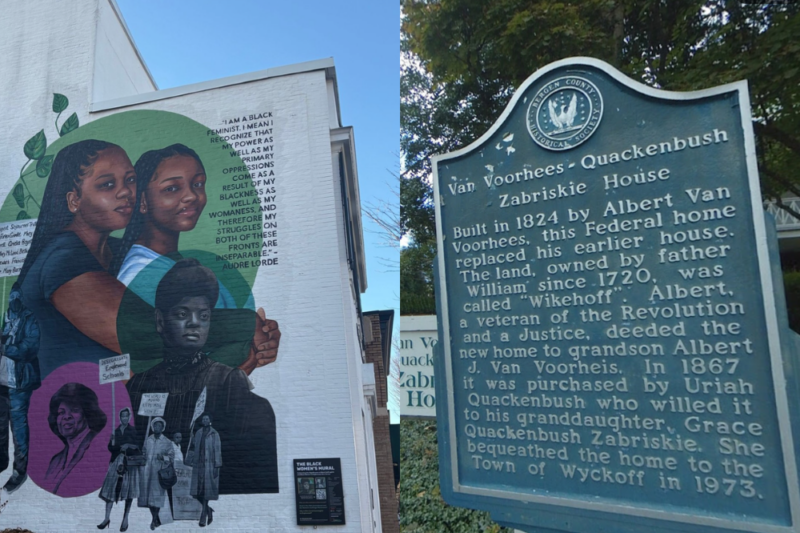
The Black Women’s Mural in Englewood is another local site that helps preserve and celebrate Black history. Per the Northern New Jersey Community Foundation, the mural features Black women leaders from the past and present, including activists connected to school desegregation efforts. Located in Downtown Englewood, the mural connects art, history, and community memory.
Bergen County’s Black history is layered. It includes the painful realities of slavery and segregation, as well as stories of resilience, leadership, education, faith, and community. Juneteenth is one time to reflect, but Bergen County’s Black history is worth learning about all year long.
Follow @thebergencountygirl on Instagram for the latest Bergen County updates, sign up for our email list here that shares everything you missed each week, and check out our events calendar, which has over 30+ events weekly to peruse.