




 Olivia Fisher
 The concept of paying to visit a beach might be foreign to those in Delaware, Hawaii, New York, Oregon, and Texas, but in New Jersey, it is not. The Garden State is the birthplace of paying for beach access. Long before debates about public access and coastal funding became widespread, one shore town set a precedent that would shape how millions experience the Jersey Shore today. Read on to learn about Bradley Beach’s role in developing beach badges and how it impacts beachgoers today.
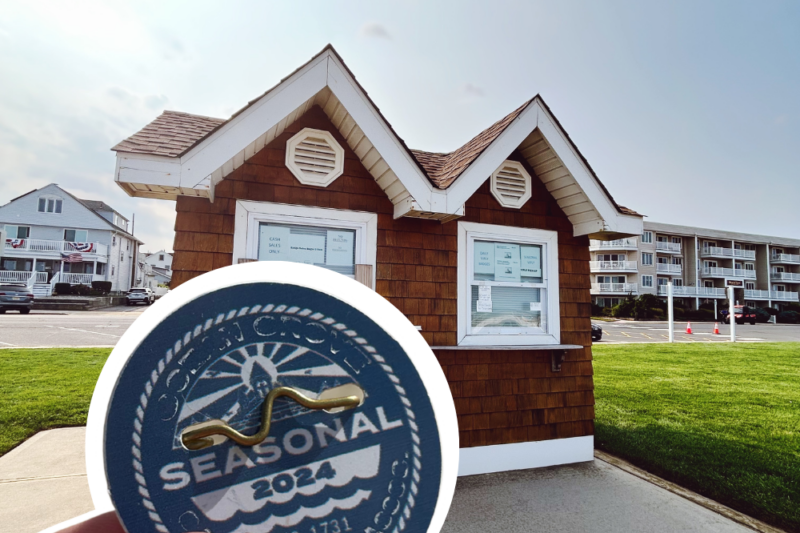
About Bradley Beach
Bradley Beach was developed by James A. Bradley, its namesake. In 1871, James acquired 54 acres of land, and the area was informally known as Ocean Park. In 1893, residents appealed to the state legislature and incorporated their community as Bradley Beach. James also developed nearby Asbury Park.
Read More: Jersey Shore Vacation Essentials: Where to Rent Bikes, Baby Gear, Beach Need, Etc.
Starting in the 1920s, Bradley Beach became a popular destination for Chinese families from Manhattan’s Chinatown. In 1941, Lee Ng Shee purchased a home for $2,000 and became the first Chinese homeowner in Bradley Beach. After Lee, more visitors from Chinatown became owners in the area, and her legacy is still present today. Lee’s grandson, John Mok, is a permanent resident on the same street as his grandmother, spending his time year-round down the shore.
History and Access Today
In 1929, Bradley Beach became the first place in the United States to charge people for beach access. The community began minting tin badges and engraving the year on each one. The badges were issued free to residents and guests of the hotels. Other people, wanting to use the public beaches, were charged a fee for a bathhouse.
Different beaches had different badges, and in 1955, New Jersey enacted a law called the Municipal Beach Act, known as the Beach Fee Statute. This permitted communities to enact ‘reasonable fees’ for beach access.
In 1972, the New Jersey Supreme Court ruled in Borough of Neptune City v. Borough of Avon-by-the-Sea that while shoreline municipalities could charge reasonable, cost-based fees for beach maintenance, they could not discriminate between residents and non-residents regarding access or pricing. Avon-by-the-Sea required non-residents to pay $2.25 a day (roughly $17.77 in March 2026) to access the beach, while residents could do so for just $1.25 a day (roughly $9.87 in March 2026). This ruling ensured equal access to the beach and strengthened the public trust doctrine.
Today, nearly everyone pays to get on the beach in Bradley Beach and needs a badge between Memorial Day and Labor Day. The 2026 Season includes $90 badges for adults 16 and over and $35 badges for those 13, 14, 15, and over 65 years of age. Children 12 and under are free. Beach badges purchased in person at ticket kiosks on the boardwalk are cash or check only. Lifeguards are on duty on weekdays from 9:00 AM to 5:00 PM and weekends and holidays from 9:00 AM to 6:00 PM. Parking on the east side of Ocean Avenue and the east end of Bradley Boulevard is all paid parking. The parking spaces are numbered, and payment is accepted at the Pay Station Kiosks located on Ocean Avenue and Sylvan Lake. Parking is free in the residential neighborhoods of Bradley Beach.
Unlike many other states, New Jersey municipalities rely on these fees to fund beach maintenance, lifeguards, cleaning, and erosion control. In contrast, other states with free beaches typically cover these costs through broader state or local taxes. After Labor Day and until Memorial Day, access to the beach is free, but there are no lifeguards present. While Bradley Beach and much of the Jersey shoreline cost money to access, there are some free beaches like Atlantic City, Keansburg, North Wildwood, Wildwood, and Wildwood Crest.
See More: The Best Independent Bookstores to Explore in NJ This Independent Bookstore Day, 4/25
Not everyone loves paying for beach access, and there are many critics throughout the state. In January 2026, Bill S1533 was introduced into the Senate. It would permit municipalities to charge reduced or no beach fees for children ages 12 to 17 and to revise the law concerning beach fees for veterans. On February 24th, it passed unanimously through the Senate.
Follow @thejerseyshoregirl_ on Instagram for the latest Jersey Shore updates, sign up for our weekly newsletter here that shares everything you missed each week, and check out our events calendar, which has over 40+ events weekly to peruse.