




 Sarah Griesbach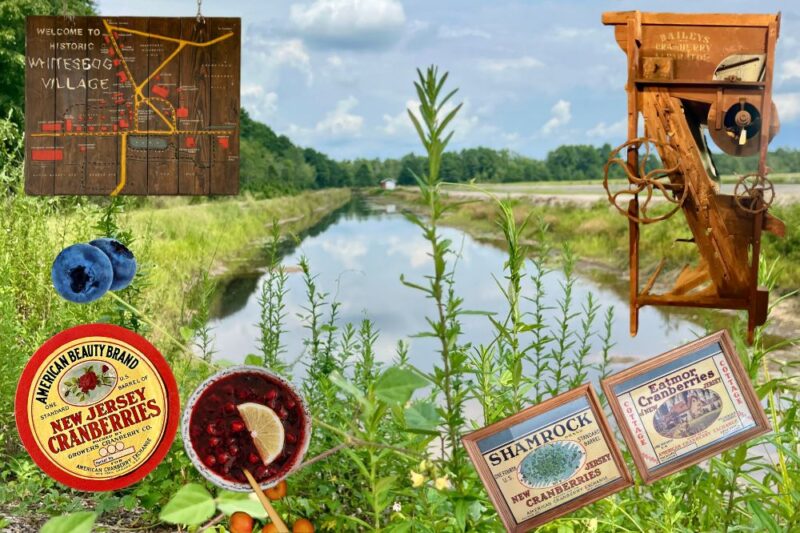
Once the biggest New Jersey cranberry farm, Whitesbog is the birthplace of the blueberry industry. Whitesbog is a significant spot in women’s history and a fun nature destination. This Pine Barrens historical village has something special to draw in day trippers during every season. Read on to learn all about farming blueberries and cranberries in Whitesbog in New Jersey’s majestic Pine Barrens.
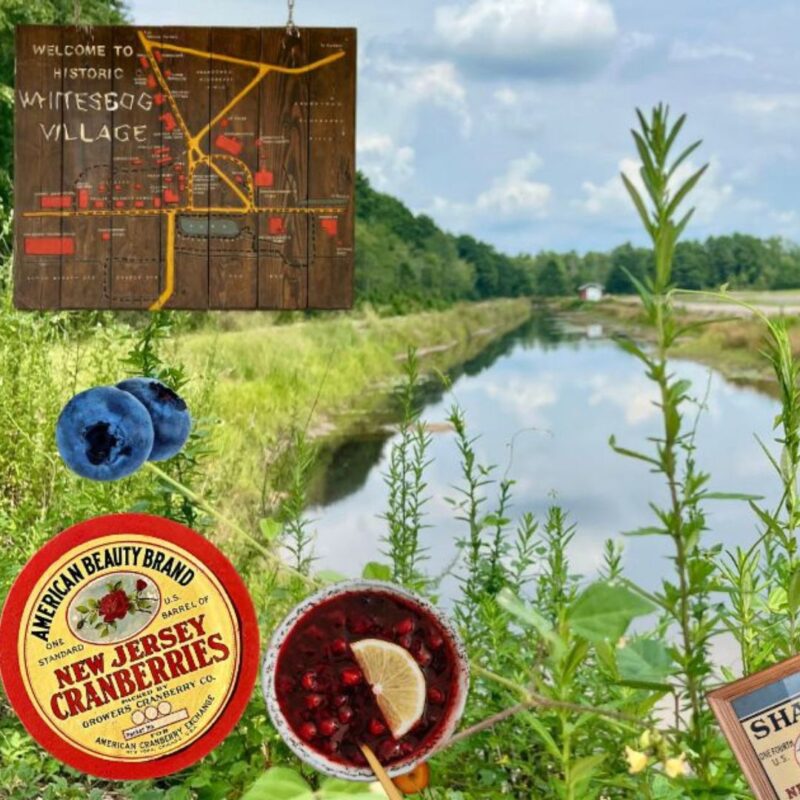
Go to Whitesbog to Learn about, to Celebrate, + to Eat the Mouth-Popping Berries
There are many excellent reasons to visit the Whitesbog Historic Farm and Village within the serenely beautiful Brendan T Byrne State Forest, but most of them revolve around the famously delicious berries. The blueberry picking season, spanning several weeks in June and July, brings the Blueberry Summer Festival. Food vendors bring delectable blueberry and blueberry adjacent treats, local artisans bring their crafts, and live music makes the party. It’s a dog-friendly blueberry bonanza. The festival seems to grow each year and includes house and garden tours, wagon rides, and opportunities to taste various varieties of blueberries, some that were planted a century ago.
Read More: Taylor Swift’s Life as a Jersey Shore Girl
Not to be outdone by the blueberry, Whitesbog cranberries also claim a season of delight. From mid-September through November, the volunteer-driven Whitesbog Preservation Trust organizes cranberry harvest tours, cranberry celebration events, Saturday markets, and seasonal hikes. Tours begin at 10AM and 12PM. . All things blueberry and cranberry can be learned in the historic village’s Cranberry and Blueberry Museum, Cranberry Research Station, Historic Workers Cottages, and at the Education Bog.
Go to Hike, Learn, + Play
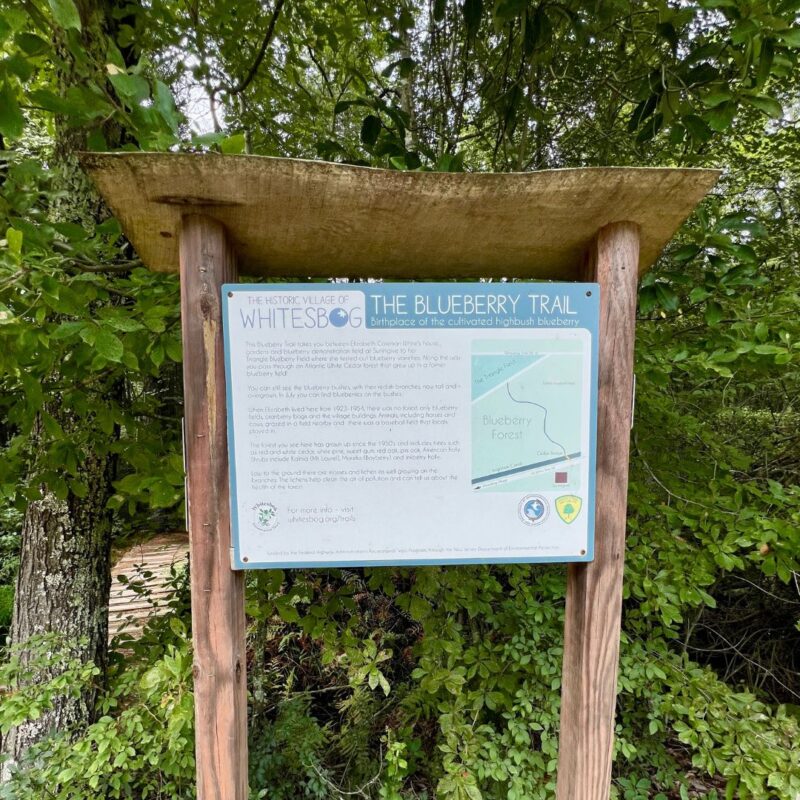
Today, there is a people-sized “Birdhouse” building dedicated to crafts and activities revolving around the wildlife of Whitesbog. The outdoors of Whitesbog has proven to be an all-season classroom. On pond ecology class outings, students survey the multitude of species living in the cedar water of the Pine Barrens. Traditional tasks, games, and stories of the Lenni Lenape are taught to groups interested in New Jersey’s first peoples.
Each season brings learning opportunities at Whitesbog. Groups are shown the transformation of pond life when tadpoles become frogs and dragonfly nymphs shed their skin to grow wings and fly off in spring and then when groundhogs and pine snakes burrow into their holes to hibernate come autumn.
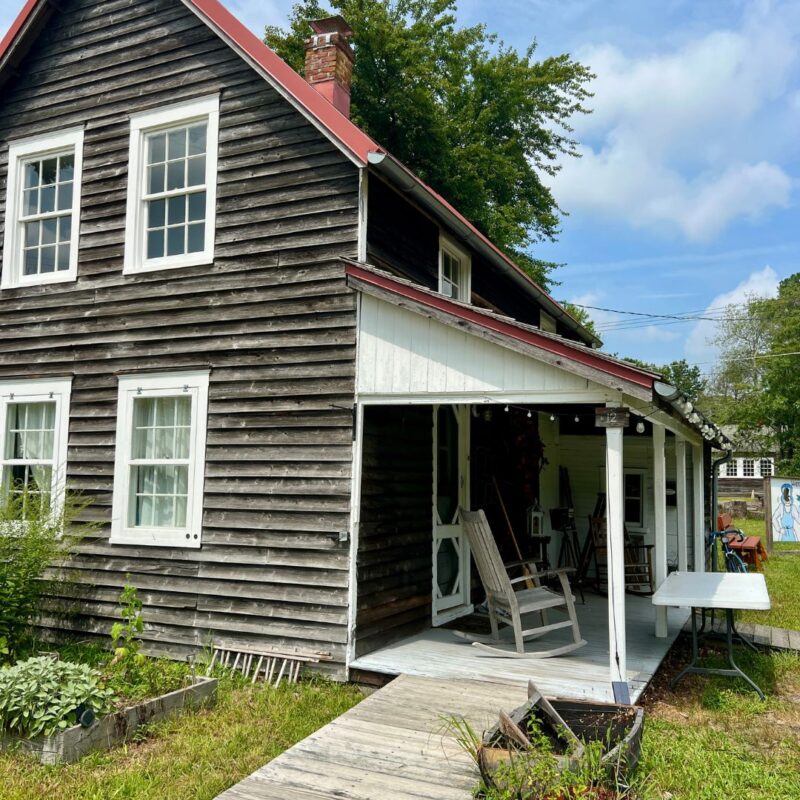
Today, the Whitesbog Preservation Trust stewards the many historic buildings that made up the Whitesbog berry business, as well as the grounds surrounding the farm. Suningive House is made to look like it might have been in the 1920s with charming living spaces and cosy workrooms that represent Elizabeth White’s time at the helm of Whitesbog Farm. The gardens also reflect the history of Elizabeth’s skillful care. Today’s Whitesbog Preservation Trust master gardeners have documented and labeled the flowers and native plants they restored and now maintain. Visitors to the gorgeously plotted garden paths learn about mountain laurel, inkberry, sundew flowers, sand myrtle, and pyxie moss that are uniquely suited to the Pine Barrens ecology.
Go to Whitesbog to Shop
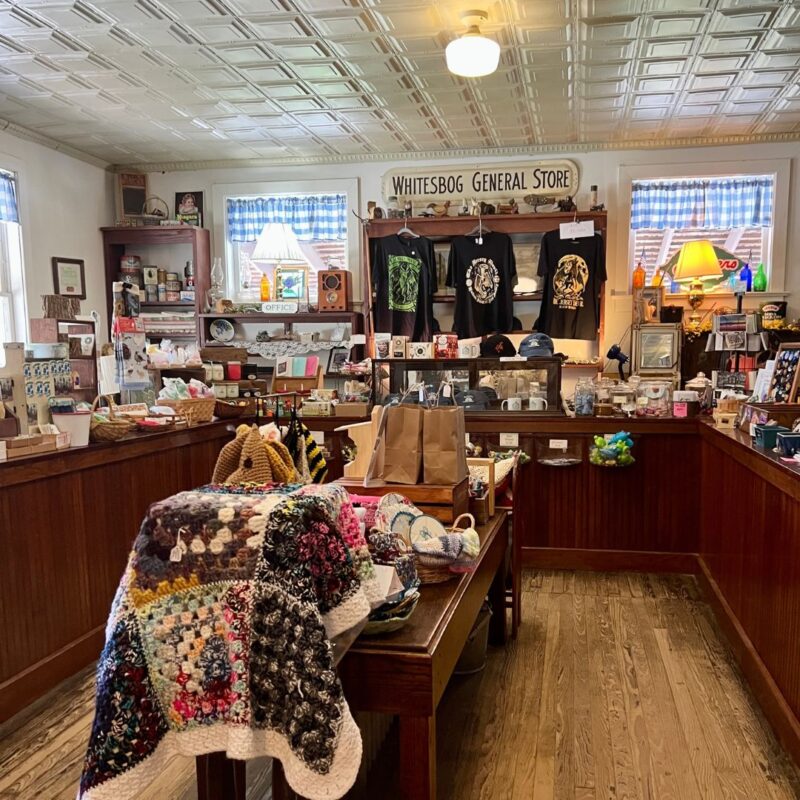
The 1924 General Store holds rows and rows of unique delights that represent a mix of what was once sold there and things unimaginable to a 1920s company employee. There are lots of the expected items: blueberry jams, sarsaparilla soda, cranberry honey, and all the culinary treasures associated with old-timey eating.
The shop holds an equal number of unexpected products: artist-made Jersey Devil apparel, nature books, cookbooks, posters, art supplies, toys, games, and cool stickers. When Whitesbog was a company town, the General Store was the only place to pick up supplies and was the center of life in Whitesbog. Today, the General Store is regularly open to the public on Saturdays from 10AM to 3PM and is open for touring groups and on special event days.
A Story that Spans Generations
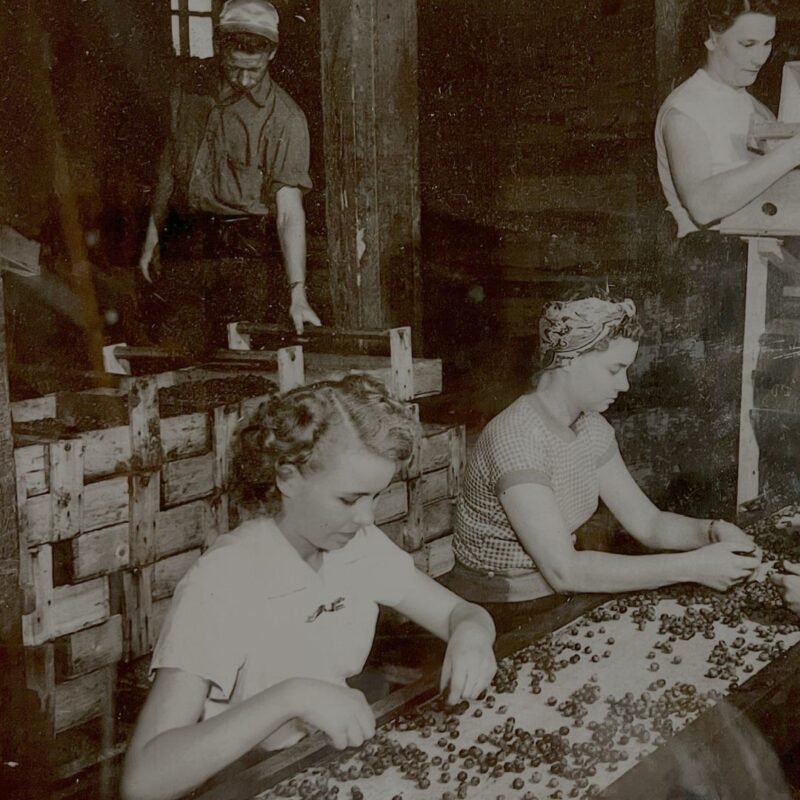
The Whitesbog farming village was founded in 1857 when James Fenwick purchased the first 490 acres of land that would become the center of a 3,000-acre berry enterprise. James first found success in a small bog he called “Skunk’s Misery.” What he began, his son-in-law, Joseph White, continued. James’ granddaughter, Elizabeth, took the family’s berry business to its zenith. By the early 1900s, Whitesbog had become the largest cranberry farm in New Jersey and, in 1916, the farm produced the very first commercial crop of blueberries.
Berry picking was typically a job for children. There was a lot of work. Some of the farm employees lived and worked there year-round. Each year, thousands of people migrated to Whitesbog Village — as well as to other Pine Barrens berry farmwork destinations like Double Trouble — seasonally, from late June through early August for the blueberries, and again in September to work the cranberry harvest. In the early 1960s, a group of Philadelphia teens, all members of the doo-wop band the Del Airs, spent a summer break picking at Whitesbog. The seasonal workers sometimes performed plays, played baseball, and shared communal meals, but mostly they worked hard.
Elizabeth White’s Wonderful Legacy
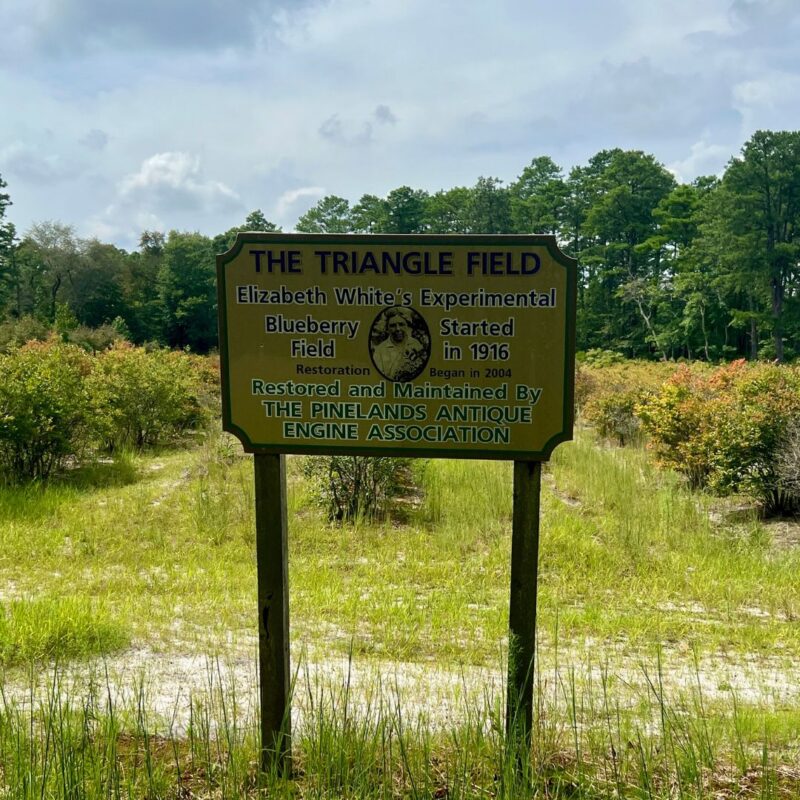
In 1893, Elizabeth took over her family’s farm and soon began growing blueberries in the land between the bogs. She worked with botanist Frederick Coville to cultivate from wild blueberries the desired traits for resistance to cold and disease, for flavor, and size. Elizabeth made her family farm the birthplace of the commercial blueberry industry — a supermarket product it’s difficult to imagine life without.
Elizabeth innovated using the new plant-derived film cellophane to enclose her wood pint containers of blueberries for large-scale distribution. Her efforts were undeniably successful. She was the first female member of the American Cranberry Association, the first woman to receive the New Jersey Department of Agriculture citation, and was instrumental in organizing the New Jersey Blueberry Cooperative Association in 1927.
The Peculiar Pine Barrens of New Jersey
Once upon a time, in 1978, actually, the swath of coastal pine barrens that makes up one-third of New Jersey was declared the nation’s first-ever National Reserve. A decade later, the area was proclaimed an International Biosphere Reserve by the United Nations. Nestled into this very special 1.1 million acres is the Brendan T Byrne State Forest, wherein sits Whitesbog.
The Pine Barrens are an ecological wonder. They provide some of the purest freshwater in the world and support a unique network of plants and animals. Pine Barrens plants have adapted to become fire-adapted — pitch pines can survive and even benefit from wildfire!
See More: The Jersey Devil: A Brief History
Nearly four thousand acres of cranberry bogs are grown commercially in the Pine Barrens region of New Jersey. Only Wisconsin produces more of the tart, uniquely American fruit. And New Jersey leads the nation in the production of the abundant sweet summer blueberry we all take for granted. We can thank the acidic sugar sand soil of the New Jersey Pine Barrens for our great bounty of scrumptious sweet blueberries and mouthwatering cranberries.
Follow @thejerseyshoregirl_ on Instagram for the latest Jersey Shore updates, sign up for our weekly newsletter here that shares everything you missed each week, and check out our events calendar, which has over 40+ events weekly to peruse.