



 The Fairfax Girl Team
This article is sponsored by Rehab2Perform.
Rehab 2 Perform is a DMV-based fitness-forward physical therapy company with four Northern Virginia locations. When most people think of physical therapy, their first thoughts are of someone rehabilitating an injury. A growing practice area for many physical therapists is pelvic health physical therapy, which is also offered at Rehab 2 Perform. Dr. Manolya Martin, DPT, is a pelvic health physical therapist at Rehab 2 Perform’s Reston location. The Fairfax Girl chatted with Dr. Manolya about pelvic health, physical therapy and who can benefit from the practice. Read on for more about pelvic health physical therapy at Rehab2Perform.
What is Pelvic Health Physical Therapy?
All people have pelvic floors, and pelvic floor dysfunction is an umbrella term for any issue with the pelvic floor muscles. “I became interested in pelvic floor physical therapy because of how important it is for pregnant women,” Dr. Manolya said, “but both men and women can benefit from it.”
Some of the common complaints that would lead a patient to seek out pelvic health physical therapy include pre-pregnancy and pregnancy support, postpartum recovery, urinary incontinence, pelvic organ prolapse, painful intercourse, and postprostatectomy care. “A lot of what people experience is common but it’s not normal,” Dr. Manolya said. “We begin with a lot of patient education about anatomy and functions of the body.”
“It can be challenging for patients to seek help with these issues,” she said. “We want them to feel comfortable having a conversation about their bodies.” Dr. Manolya noted that talking about pelvic floor issues can be especially difficult for pregnant women, who are often afraid of doing things that may hurt the pregnancy. “There is no such thing as an unsafe core exercise. A lot of my job is educating women on what they can do with their bodies,” she said. “[they need] to have robust and strong bodies to support pregnancy and postpartum recovery, which includes a lot of core strengthening.”
Patients can come in with a variety of issues, and the goal of each treatment plan is different for each patient. “Some post-partum women want to get back to doing marathons or Crossfit while others want to manage urinary incontinence,” Dr. Manolya said. “We take them through their recovery back to whatever it is that they want to get back to.”
Dr. Manolya became interested in pelvic floor physical therapy because many of her friends were getting pregnant and having babies, and complaining to her about their bodies. “Pregnancy can be a scary time,” she said. “There’s a lot of conflicting information out there, and women want to make good choices for themselves and their babies. As a movement expert, I wanted to help out.”
Dr. Manolya has completed specialized training in pelvic floor physical therapy, including from the American Physical Therapy Association, which classifies pelvic floor issues as an orthopedic impairment.
Connecting Physical Therapy and Pelvic Health Physical Therapy
Dr. Manolya takes a holistic approach to creating treatment plans for patients with pelvic floor issues. “Everything is connected,” Dr. Manolya said. “Our bodies don’t exist in a vacuum.” The treatment may begin with a full session dedicated to patient education if that’s what the circumstances dictate. “When a patient comes in for an evaluation, we always start in our private treatment room,” she said. “I want them to feel comfortable talking about whatever it is that they’re about to say since some of these questions are very intimate.”
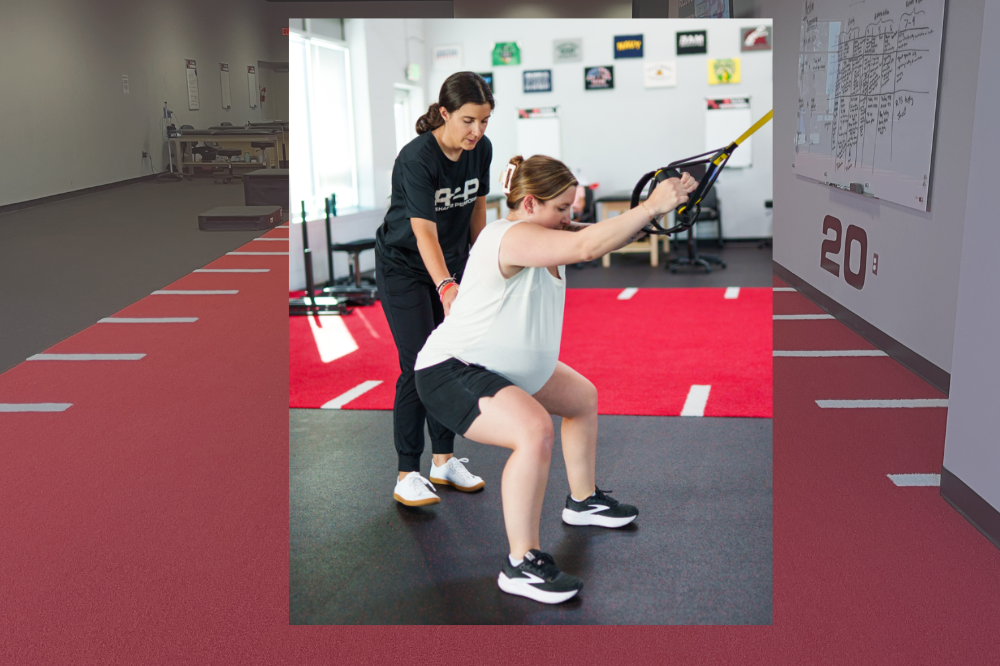
Then, Dr. Manolya will develop a custom plan for each patient. “There aren’t pelvic floor-specific exercises, so while it may look like regular physical therapy exercises, we’re targeting areas on purpose.” The patient education also plays a role in the plan, since Dr. Manolya believes that pelvic floor PT won’t work unless the patient understands what’s happening. “We want the patient to take control of their bodies,” she said.
This is where Dr. Manolya highlighted R2P’s fitness-forward approach to treating patients. “We want to create a supportive environment that’s reminiscent of an athletic training facility,” she said. “We want to empower patients to return to their normal activities.”

There are four Northern Virginia locations: Leesburg, Reston, Tysons Corner, and most recently, The St. James in Springfield. Rehab 2 Perform accepts all major medical insurances, including Medicare, Tricare, and Kaiser Permanente.
Learn more about these great Pelvic Health services and get started at Rehab2Perform.com/Pelvic . Or find a Rehab 2 Perform location – Rehab2Perform.com/locations