


 Stephanie Spear
 The Capital Area Food Bank is one of the largest nonprofit community organizations in the DC Metro area. Many people know the name, but the scope of the organization’s work is less well-known. The CAFB team invited The Fairfax Girl to visit the Lorton office + distribution facility to learn more about the organization. What we discovered was a deeply coordinated effort that blends logistics, education, advocacy, and compassion. Read on for more about the Capital Area Food Bank and how you can support its mission.
The Capital Area Food Bank (CAFB) started in 1980, formalizing a loose arrangement of local churches and non-profit organizations that were distributing food to neighbors in NE DC. Now, 45 years later, the organization partners with over 450 local organizations throughout DC, Maryland, and Virginia. Over 20,000 volunteers per year participate, and countless families are supported by the CAFB mission. Over time, the CAFB has grown in size and the services offered, such as nutritional information and education offered in multiple languages, recipes and cooking instruction, growing its own produce, and working to accommodate special dietary needs.
Though best known for distributing food, CAFB’s work extends far beyond that. The organization also provides:
CAFB’s model is designed to meet people where they are—literally and figuratively. Food is distributed through community partners like schools, churches, and local nonprofits that best understand neighborhood needs. The team constantly gathers feedback from clients and partner organizations, making small but meaningful adjustments daily to stay responsive to real-time challenges. Read more: Cars and Coffee: A Weekend Tradition Throughout Northern Virginia
The CAFB has also become more sophisticated in its day-to-day operations, feeling more like Amazon or Costco, tracking incoming and outgoing loads, managing quantities of items, and keeping track of what organizations need which items. There’s also a bigger focus on the relative nutrition of the items provided and educating clients on how to prepare items. There are recipe cards written in Spanish and English provided with some items, and there is a YouTube channel with dozens of cooking and other instructional videos. The CAFB’s in-house dietary team works to come up with appealing, culturally sensitive recipes for ingredients so that one item can be used multiple ways.
On the leadership level, the CAFB is active in advocating to strengthen programs like the Supplemental Nutrition Assistance Program (SNAP); Increase access to nutritious meals at school; Improve the efficacy of the Emergency Food Assistance Program (TEFAP); and promote ‘Food Is Medicine’ initiatives that pair food with health care.
The CAFB has partnered with local hospitals to set up ‘food pharmacies’ – programs at local hospitals where patients can get fresh food at each doctor’s visit. This is part of the CAFB’s mission to support clients’ balanced diets and the connection between healthy food and overall wellness.
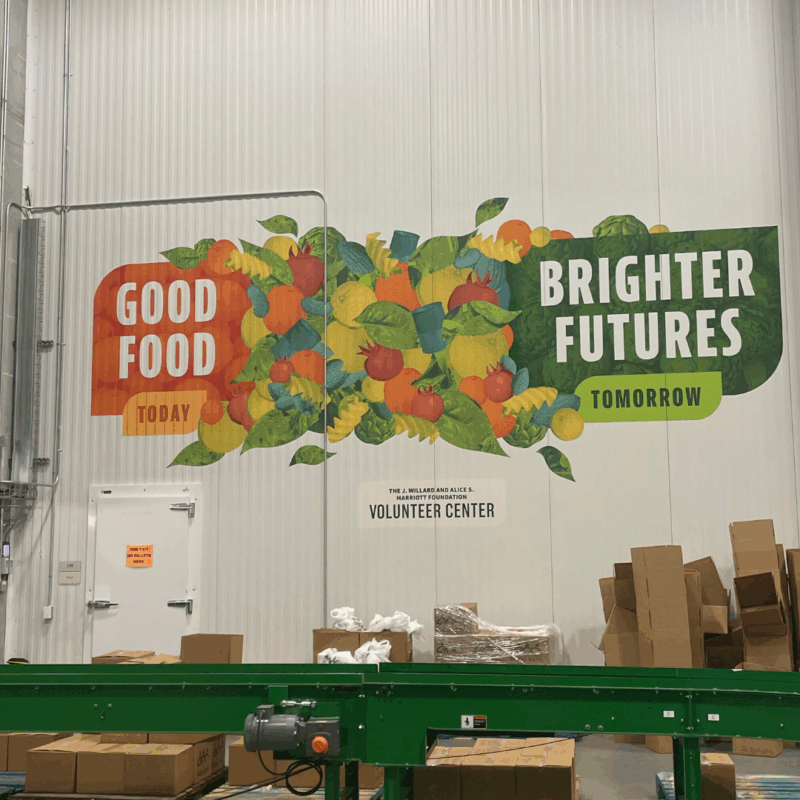
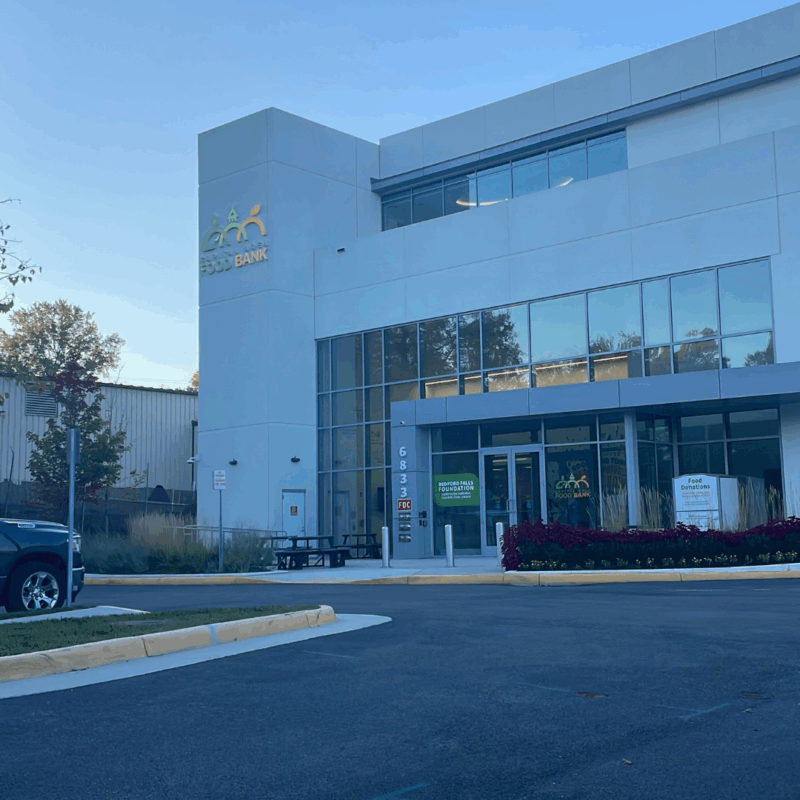
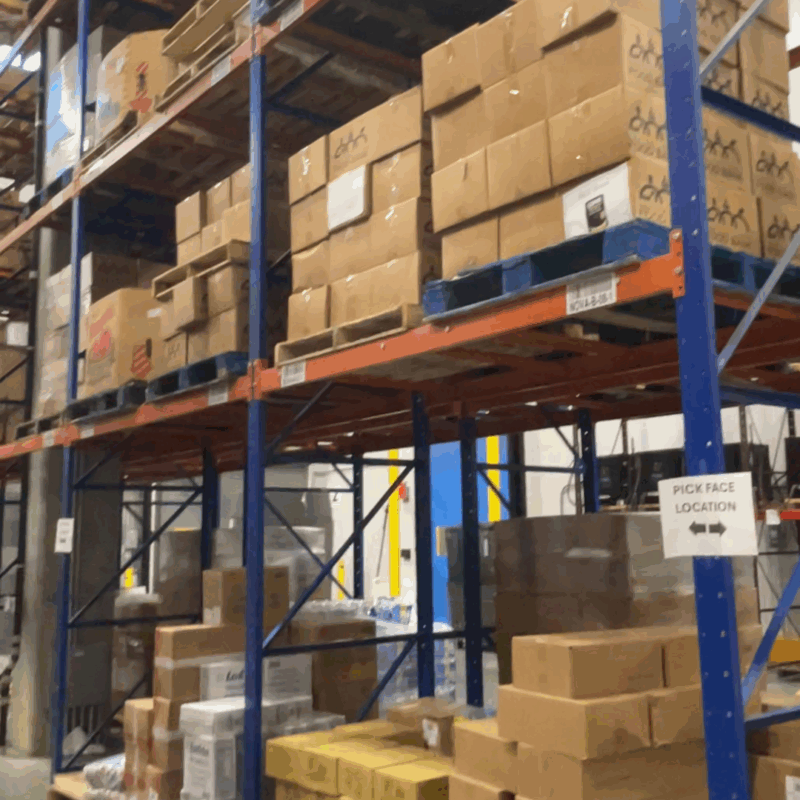
We spent the morning with Kelly Andreae, Senior Director of the Northern Virginia region, at the CAFB’s Lorton location. The modern space is a far cry from the original warehouse that CAFB took over in 1998. “It used to be a Frito-Lay distribution facility,” Kelly told us. “Which makes sense because it’s right off of I-95.” The facility reopened in 2024 after a major overhaul that tripled the size of the former space and added cold storage areas for fresh and frozen foods. “The warehouse is 43,000 square feet,” Kelly said. “We can hold 865 pallets in the entire warehouse, with 468 being in the cooler space.”
In addition to the increased warehouse space, the facility has eight truck bays for multiple trucks, buses, and vans to come and go daily, bringing food to the CAFB’s partner organizations. The building also has meeting rooms for client and community programming, and office space for CAFB employees.
See more: Why Fairfax Pet Parents Are Loving Bond Vet
The CAFB distributes about 1 million pounds of food a month, which equals about 900,000 meals worth of food per month. “A lot of what we handle here is food safety regulations, warehouse logistics, storage,” Kelly said. “Our partners often don’t have the space or resources for that so we make it as easy as possible for them.” The CAFB uses an online ordering system for partner organizations to ‘shop’ the warehouse and get what they need.
Something we learned during our visit was how fluid food security is. While there is an official USDA definition, people’s lives aren’t static. They may dip in and out of food insecurity based on different circumstances. Kelly pointed to the yearly survey as truly a snapshot in time of need. “The survey is great, but it was published in May [2025] and doesn’t account for the government shutdown,” she said. “So a lot of people who have never been food insecure in their lives before are finding themselves there.”
Food security, defined as a lack of consistent access to enough food for an active, healthy life and can range from low (reports of reduced quality, variety, or desirability of diet. Little or no indication of reduced food intake to very low (reports of multiple indications of disrupted eating patterns and reduced food intake). The real-time updates from local partners help the CAFB respond to increased need. “We had a food distribution earlier this week where we anticipated 150 people, and 370 showed up,” Kelly said. “We had to bring in an extra truck of food because so many folks are in need.”
Per the CAFB’s study, food insecurity in Northern Virginia is getting worse. More than one in three people is impacted by food insecurity, and very low food security has increased for the third year in a row. In the 2025 study, 22% of respondents indicated very low food security. “People might be surprised to learn how close hunger is in their communities,” Kelly said.
There are volunteer opportunities for all ages and skills at the CAFB. “A lot of families volunteer together as a group,” Kelly said. “Even little kids can help out.” For smaller children, Kelly said that volunteering at one of the farmers-market style food distribution events would be a good fit, since children can pack the items into a bag.
“For older kids, we can take volunteers in the warehouse to help sort items,” Kelly said. “A lot of them come in and really enjoy it.” Adults can help sort items, work in the garden, deliver items, and more. There are also opportunities to donate food and to help out with fundraising. But, Kelly said, the support that has the most impact is to donate money.
Follow @thefairfaxgirl on Instagram + TikTok for the latest Northern Virginia updates, and check out our events calendar, which has over 100+ events weekly to peruse.
About the Capital Area Food Bank


Serving Virginia
Food Security in Northern Virginia
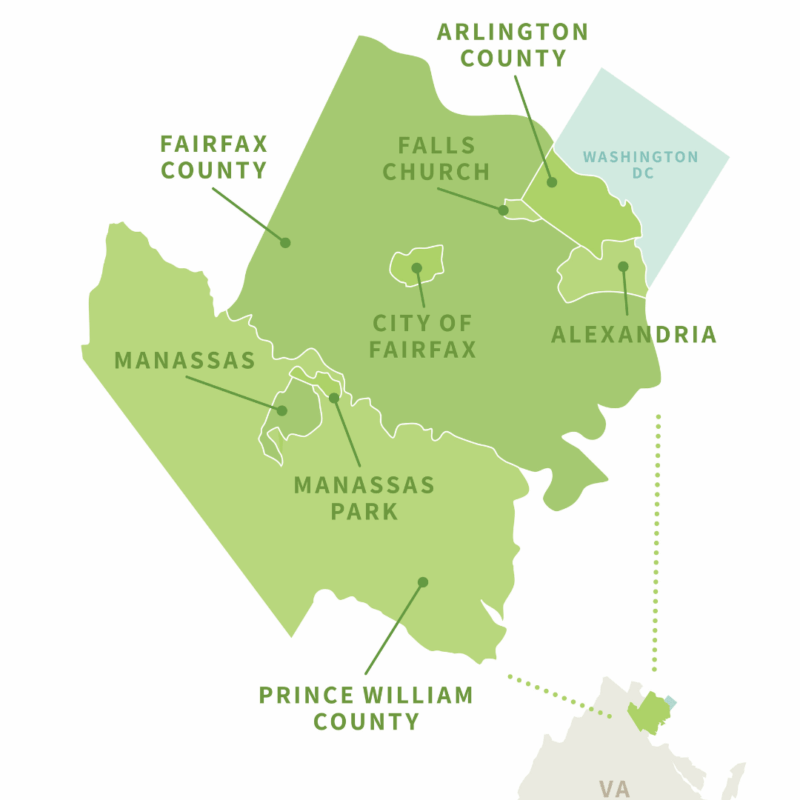 The Northern Virginia communities supported by the CAFB. Image courtesy of CAFB.
How to Help