




 stephanie
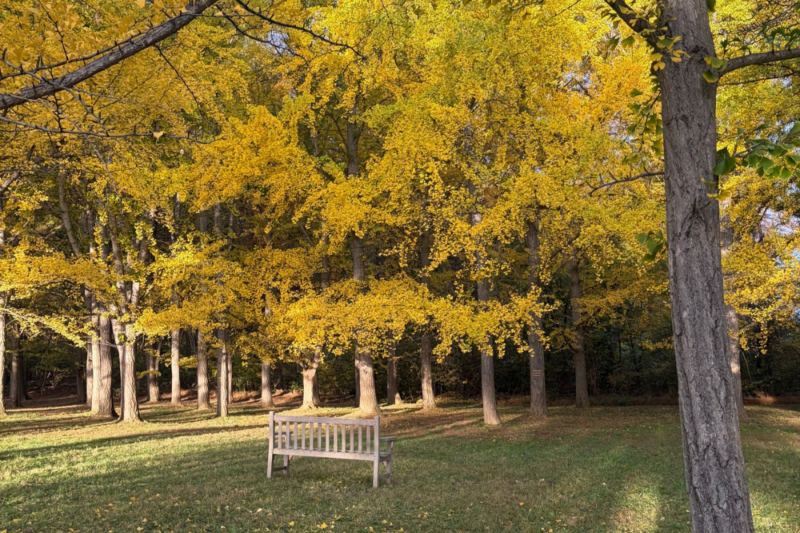
This Northern Virginia farm turns gold every fall, and it’s free to visit. Blandy Experimental Farm is home to the State Arboretum of Virginia, and it’s located in Boyce, Virginia, about an hour away from Fairfax. It’s a 700-acre outdoor destination with gardens, walking trails, and plenty of local flora and fauna. While it’s an amazing year-round destination, it becomes a must-visit in fall when its famous Ginkgo Grove turns from green to yellow to sparkling gold before the season ends. Read on for more about the Ginkgo Grove at Blandy Experimental Farm and how to plan your visit.
About Blandy Experimental Farm
Located in Clarke County, about an hour west of much of Northern Virginia, Blandy Experimental Farm is a 712-acre property affiliated with the University of Virginia. The farm is home to the State Arboretum of Virginia, which occupies 172 acres of the property and is open to the public every day of the year.
Blandy is an active research facility, educational destination, and living collection of plants from around the world. Visitors can explore the grounds on foot, wander through gardens, admire unusual trees, and learn about Virginia’s natural environment.
The property’s history dates back to 1926, when New York stockbroker Graham F. Blandy left 712 acres of his Clarke County estate, known as The Tuleyries, to the University of Virginia. The university appointed botanist Dr. Orland E. White as the farm’s first director in 1927, and the early arboretum collections began taking shape in the following years.
The grounds eventually became known as the Orland E. White Arboretum, and in 1986, the Virginia General Assembly officially designated the property as the State Arboretum of Virginia. The farm is also listed on the National Register of Historic Places, with several historic structures still standing on the property. Among them is the Quarters building, which includes a section that originally housed enslaved people associated with The Tuleyries estate. Today, the building is part of Blandy’s administrative and educational facilities, connecting the property’s current mission with its much longer history.
View this post on Instagram

The arboretum contains one of the Southeast’s largest conifer collections, with approximately 1,300 specimens representing trees from North America and other parts of the world. Visitors can also explore the American Boxwood Society Memorial Garden, which contains more than 160 boxwood cultivars, along with the Cedar of Lebanon Allee, herb gardens, native plant areas, and towering Virginia State Champion trees.
Read more: The Best Northern Virginia Breweries to Visit This Fall
The Nancy Larrick Crosby Native Plant Trail introduces visitors to native species and the different habitats found throughout the property, while the Community Forest is an ongoing volunteer-supported project dedicated to planting Virginia native trees. Walking trails, gravel roads, and open grassy areas make it easy to spend a few hours exploring at your own pace, and leashed dogs are welcome.
Blandy also has a significant scientific mission. As a University of Virginia ecological field station, the property supports environmental research in fields such as ecology, plant biology, and conservation, with research habitats that include woodlands, pastures, ponds, and fields.
Educational programming is another major part of the farm’s work, with guided tours, school programs, and public activities that introduce visitors to everything from gardening to environmental science. Groups of six or more can arrange guided visits in advance, and the farm maintains a collection of visitor maps and brochures for those exploring independently.
About the Famous Ginkgo Grove
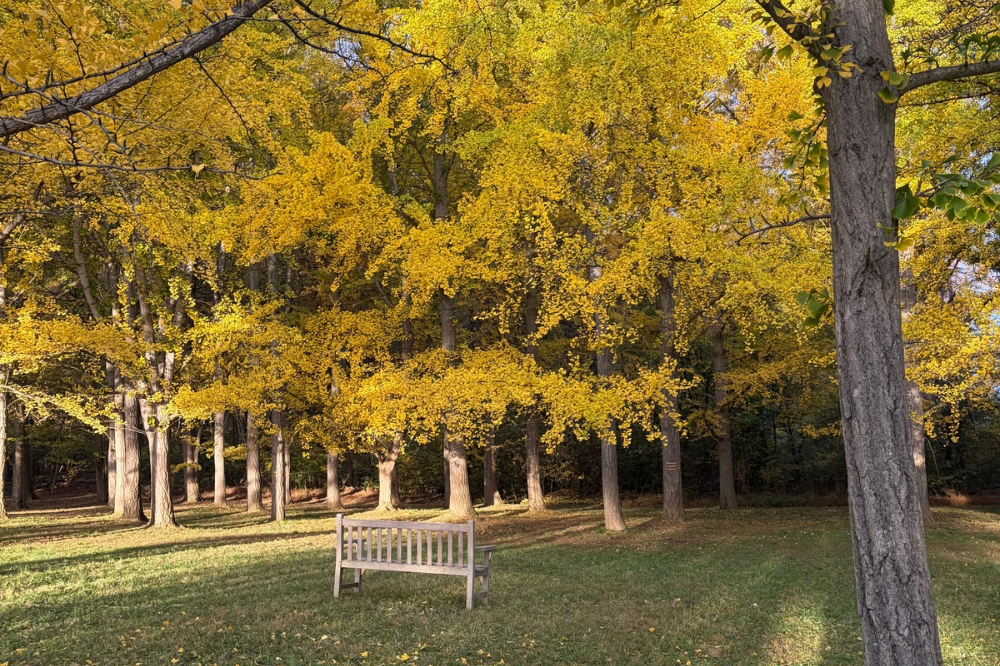
The Blandy Ginkgo Grove is the main attraction during the fall months. The grove contains more than 300 ginkgo trees, making it one of the largest public collections of its kind in the United States. Each autumn, the trees’ distinctive fan-shaped leaves transition from green to brilliant shades of yellow, creating a canopy of golden foliage. As the leaves fall, they cover the ground beneath the trees, creating an equally impressive scene.
The transformation typically happens in late October and early November, although the exact timing depends on weather conditions. Unlike many other fall foliage destinations in Virginia, where visitors see a mixture of red, orange, and yellow leaves, Blandy’s Ginkgo Grove is known for its nearly uniform golden color. The trees themselves have an interesting history, too.
Ginkgo biloba is an ancient tree species with a lineage dating back millions of years, often described as a living fossil because of its resemblance to plants preserved in the fossil record. Native to China, ginkgo trees have become popular ornamental trees around the world, particularly for their striking autumn color and unusual leaf shape.
The ginkgo grove was part of a scientific experiment conducted during the 1930s and 1940s by the farm’s first director, Dr. Orland E. White. White wanted to study the ratio of male to female ginkgo trees grown from seeds. Unlike many other tree species, ginkgoes generally have separate male and female trees, and determining their sex requires waiting until they reach reproductive maturity.
See more: 18+ Things To Do With Your Multi-Generational Group Over Thanksgiving Weekend in Northern Virginia
Dr. White and his students planted hundreds of ginkgo seeds collected from a tree on the University of Virginia’s grounds in Charlottesville, establishing what would eventually become Blandy’s famous grove. Because ginkgo trees can take approximately 20 years to mature, Dr. White never lived to see the experiment’s final results. Researchers eventually determined the sex of the trees in the 1980s, identifying 157 female trees and 144 male trees, an almost even split. The results of his work are now one of Virginia’s most popular fall destinations.
Plan Your Visit
Admission is free, and the park is open from dawn till dusk 365 days a year. Thousands of visitors per day are drawn to the ginkgo grove during its peak season, and during that time, vehicle traffic in the park is restricted. Leashed dogs are welcome – don’t forget to clean up after your pet. TFG tip: many equestrians also use the trails at Blandy, so keep an eye out for four-legged visitors.
Once at the grove, visitors can wander among the trees, take photographs, and enjoy the seasonal scenery. TFG tip: female ginkgo trees produce fleshy, seed-bearing structures that develop a strong, unpleasant smell when they fall to the ground. It’s part of the natural ginkgo experience, so watch where you’re walking. Blandy also asks visitors not to collect leaves, fruit, or branches, climb trees, or fly drones over the property.
For those planning a 2026 visit, the farm is hosting Ginkgo Gold Weekends on October 31st and November 1st, followed by November 7th and 8th, with special visitor services from 10AM to 4PM. The festivities include food and coffee vendors, ginkgo-themed merchandise, additional restrooms, and opportunities to learn about sponsoring a tree.
Follow @thefairfaxgirl on Instagram + TikTok for the latest Northern Virginia updates, and check out our events calendar, which has over 100+ events weekly to peruse. Sign up for our newsletter here.