



 The Fairfax Girl Team
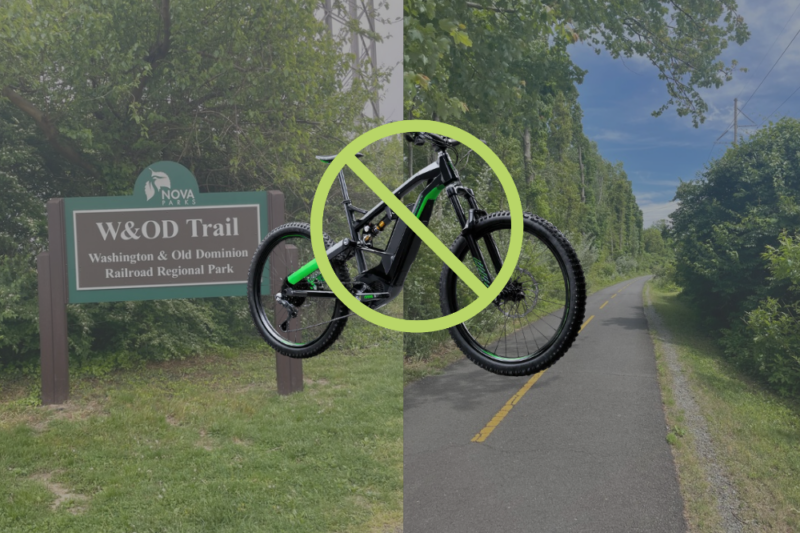
The NOVA Parks Board of Directors approved new regulations for the Washington & Old Dominion (W&OD) Trail, including a ban on certain high-speed electric bicycles and other motorized devices. The decision comes as Fairfax County Public Schools has also tightened its restrictions on e-bikes and e-scooters, while Virginia lawmakers examine additional safety measures. Read on for more about the new W&OD Trail regulations, current e-bike laws in Virginia, and what other changes could be coming to Northern Virginia for e-bike riders.
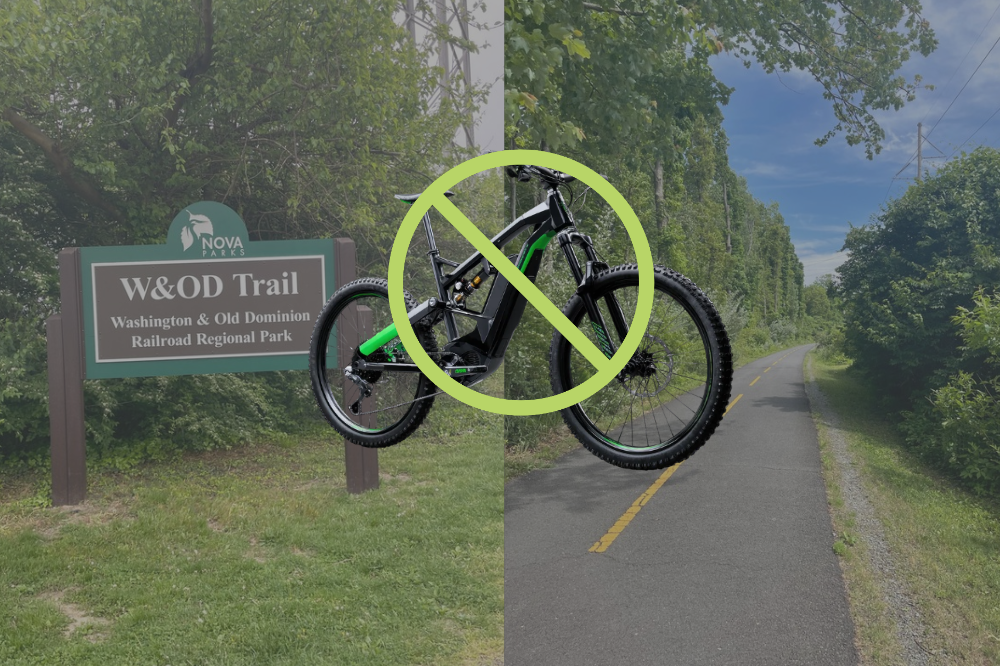
New Regulations for the W&OD Trail
On Thursday, November 19th, the NOVA Parks Board of Directors adopted an amended version of Regulation 2.0, establishing new restrictions for electric bicycles and other motorized devices on the 45-mile W&OD Trail. The trail runs from Arlington County through Fairfax and Loudoun counties, connecting communities including Falls Church, Vienna, Reston, Herndon, Sterling, Leesburg, and Purcellville. According to NOVA Parks, the trail welcomes more than 2 million users annually, including pedestrians, cyclists, runners, and people using electric mobility devices.
Under the newly adopted regulations, the following devices are prohibited from the park:
- Class 3 electric bicycles, which provide pedal assistance up to 28 miles per hour.
- Motorized vehicles with electric motors exceeding 750 watts.
- Motorized vehicles without pedals, except qualifying scooters and skateboards capable of speeds no greater than 20 miles per hour.
- Motorized vehicles with a single wheel.
Class 1 and Class 2 e-bikes, which have motor assistance limited to 20 miles per hour, are not included in the new prohibition. Exceptions also apply to motorized wheelchairs and other mobility devices used by people with disabilities, as well as authorized law enforcement and emergency vehicles.


Read more: Our Favorite Spots to Shop Small This Season
The regulations also establish new operating hours of 5AM to 10PM daily, extending the previous closing time by one hour. Additional provisions require dogs to remain on leashes no longer than six feet, prohibit reckless vehicle operation, require compliance with posted signs, and limit gatherings of more than 25 people without written permits.
NOVA Parks Board Chair Sean Kumar said the changes follow an increase in crashes and safety concerns involving faster electric-powered devices. The regulations were developed following nine months of coordination with local jurisdictions and public safety agencies along the trail. NOVA Parks has also held a series of free electric mobility safety events since July 2026, educating riders about Virginia laws, trail etiquette, and safe operation.
The rules are enforceable, and new signs explaining the restrictions will be installed at park entrances and along the trail in the coming weeks.
E-Bikes in Virginia
The new W&OD Trail rules are part of a broader conversation about electric bikes and other personal transportation devices throughout Virginia. Under Virginia law, electric power-assisted bicycles are divided into three categories based on how their motors operate and the speeds at which assistance stops. These classifications determine where certain devices can be used and what additional requirements apply to riders.
Under Virginia Code § 46.2-904.1, Class 1 e-bikes provide assistance only while pedaling, up to 20 miles per hour; Class 2 e-bikes may be propelled by the motor without pedaling, also up to 20 miles per hour; and Class 3 e-bikes provide pedal assistance up to 28 miles per hour. All three classes must have motors rated at no more than 750 watts. E-bikes generally have the same rights and responsibilities as traditional bicycles and do not require a driver’s license, registration, or license plate. They may generally be operated where bicycles are permitted, although localities and agencies can restrict their use on certain paths and trails. Class 3 riders and passengers must wear helmets, and the bicycles must have speedometers.
Other Northern Virginia jurisdictions have their own rules governing e-bikes and similar devices. In Alexandria, e-bikes and e-scooters are prohibited on sidewalks but permitted on streets, in bike lanes, and on certain trails. The city also expanded its helmet requirements in November 2026 to include riders ages 14 and younger using electric mobility devices. In Arlington, e-bikes are permitted on streets, sidewalks, and paved multi-use trails, with speed limits of 20 miles per hour on streets and trails and 6 miles per hour on sidewalks. In Loudoun County, e-bikes are generally permitted on roads, sidewalks, and trails unless otherwise posted, and riders younger than 15 must wear helmets. The county also requires e-bike riders to follow state traffic laws and applicable park and trail regulations.
In Fairfax County, the Fairfax County Park Authority maintains guidance allowing qualifying electric bikes and other electric mobility devices in areas where traditional bicycles are permitted, subject to applicable laws and restrictions. Riders are expected to yield to pedestrians and equestrians, follow posted signs, and operate their devices responsibly. In November 2026, FCPS announced changes to Regulation 8610 prohibiting the operation of e-bikes, e-scooters, hoverboards, motorized skateboards, mopeds, Segways, and similar devices on school property. Students may still use these devices to travel to and from school, but they must dismount at the school property line and walk their devices to designated parking areas. The same rule applies when leaving school, with students required to walk their devices off school property before riding.
According to FCPS, the restrictions are intended to improve safety during school arrival and dismissal, when students, pedestrians, buses, and vehicles frequently converge. The policy includes exceptions for wheelchairs and other disability-related mobility devices.
More E-Bike Regulations Could Be Coming to Virginia
Virginia lawmakers are also examining whether additional statewide regulations are needed to address the growing use of e-bikes, scooters, and similar devices. During the 2026 General Assembly session, lawmakers approved House Bill 1120, directing the Virginia Department of Motor Vehicles to convene a working group examining safety concerns involving electric bicycles, motorized scooters, skateboards, mopeds, and other personal mobility devices. The group was directed to consult with stakeholders including law enforcement agencies, local governments, manufacturers, and bicycle organizations before making recommendations about potential legislation or regulatory changes.
According to the Virginia Association of Counties, topics under consideration include whether additional devices should require registration or licensing, how age restrictions and helmet requirements should apply, and how speed limits and enforcement could be improved. The working group’s findings were due to the General Assembly’s House and Senate Transportation Committees by November 1st, 2026. As of November 24th, the state’s public reporting system still listed the report as overdue. Any resulting legislative proposals would require further action before becoming law.
See more: Holiday Markets in Northern Virginia This Season
Northern Virginia jurisdictions are also taking action at the local level. In Alexandria, City Council approved a new helmet requirement on November 14th, 2026, expanding existing bicycle helmet rules to include certain electric mobility devices. Under the ordinance, children ages 14 and younger must wear protective helmets when operating or riding as passengers on e-bikes, e-scooters, motorized skateboards, and electric personal assistive mobility devices such as Segways and hoverboards.
Meanwhile, Arlington County is preparing for its next round of shared micromobility permits, which will cover rental e-bikes and scooters beginning January 1st, 2027. The county’s updated permitting process establishes an initial one-year term, with a possible extension through 2028 based on operator performance and county conditions.
The county will continue permitting up to 2,000 shared e-scooters and 1,000 shared e-bikes. Arlington also maintains rules for its multi-use trails, including requirements to yield to pedestrians, provide audible warnings before passing, and follow posted signs.
Follow @thefairfaxgirl on Instagram + TikTok for the latest Northern Virginia updates, and check out our events calendar, which has over 100+ events weekly to peruse. Sign up for our newsletter here.