

 Olivia Fisher
As 2025 comes to an end, it is time to look back on the year and maybe even the century. Here at TLG, we are exploring what New Jersey looked like in 1925. Keep scrolling to explore what was around, who was born, and what was yet to come. Read on for a guide to New Jersey in 1925.
Municipalities That Formed in 1925
New Jersey welcomed several new municipalities in 1925, including Clementon and Stratford in Camden County, Estell Manor in Atlantic County, Ship Bottom and Pine Beach in Ocean County, Union Beach in Monmouth County, and Union City in Hudson County. Today, New Jersey contains 564 municipalities.
Notable Firsts From 1925
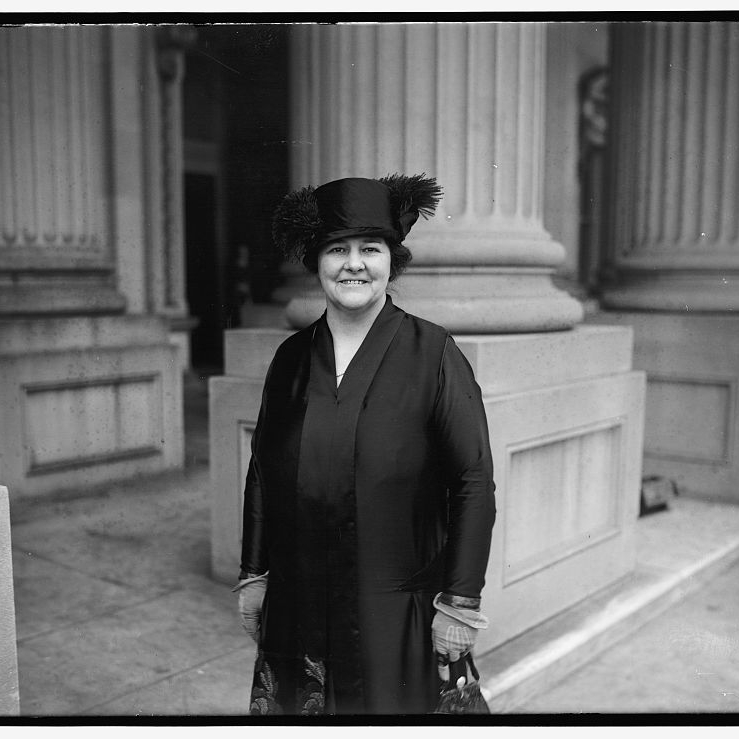 Mary Norton. Image from the Library of Congress.
In 1925, Mary Norton became the first woman of the Democratic Party elected to Congress and the first woman elected to represent New Jersey in Congress. She served from 1925 until 1951. She originally represented New Jersey’s 12th congressional district, composed of Jersey City and Bayonne, and later represented the 13th district.
Read More: New Jersey Towns with Lenape History: Hoboken, Weehawken, + Beyond
What Opened in 1925?
View this post on Instagram
In 1925, several schools, museums, and concert halls opened in the Garden State. West Side High School in Newark, Memorial High School in Millville, Holy Family Academy in Bayonne, Clarksburg School in Millstone Township, Our Lady of Good Counsel in Newark, and Immaculate Conception High School in Montclair all opened that year. Memorial High School closed in 1964, Clarksburg School in 1995, Our Lady of Good Counsel in 2006, Holy Family in 2013, and Immaculate Conception High School in 2025. Only West Side High School is still open.
Beyond schools, a concert hall and museum opened in 1925. The Salaam Temple, now Newark Symphony Hall, opened at 1020 Broad Street in Newark. The main concert hall is named for Sarah Vaughan, a native of Newark. The Paterson Museum opened at 2 Market Street in Paterson. It is owned and run by the City of Paterson, preserving and displaying the area’s industrial history.
Where Could Someone Watch a Movie in 1925?
A century ago, movies were a treat and a rarity. No one had a TV in their house or could stream movies on their cell phone. Most people were lucky to have a radio at home. Moviegoers in New Jersey could see a movie or a silent film at The Claridge, which opened in Montclair in 1922. Other options included the Strand Theater in Lakewood Township, the Princeton Garden Theatre in Princeton, the Centre Street Theatre in Trenton, the Dunellen Theatre in Dunellen, and the Parkway Theatre in Stone Harbor.
Who Was Born in 1925?
Lee Van Cleef
Actor Lee Van Cleef was born on January 9, 1925, in Somerville to Marion Lavinia Van Fleet and Clarence LeRoy Van Cleef. His mother was a concert pianist, and his father was a pharmacist. Lee attended Somerville High School. He starred in over 170 films and television roles, including many Westerns. He passed away in 1989.
Arthur Imperatore Sr.
Arthur Imperatore Sr. was born on July 8, 1925. He was the founder and president of the NY Waterway. He was born in West New York to Eugene and Teresa Imperatore, who owned a grocery store. He passed away in 2020.
Joseph R. Applegate
Joseph R. Applegate was born on December 4, 1925, in Wildwood. His parents operated a boarding house. In 1955, he became the first Black faculty member at the Massachusetts Institute of Technology. He later worked at Howard University, where he started the nation’s first Ph.D. program in African Studies. He passed away in 2003.
Who Was the Governor in 1925?
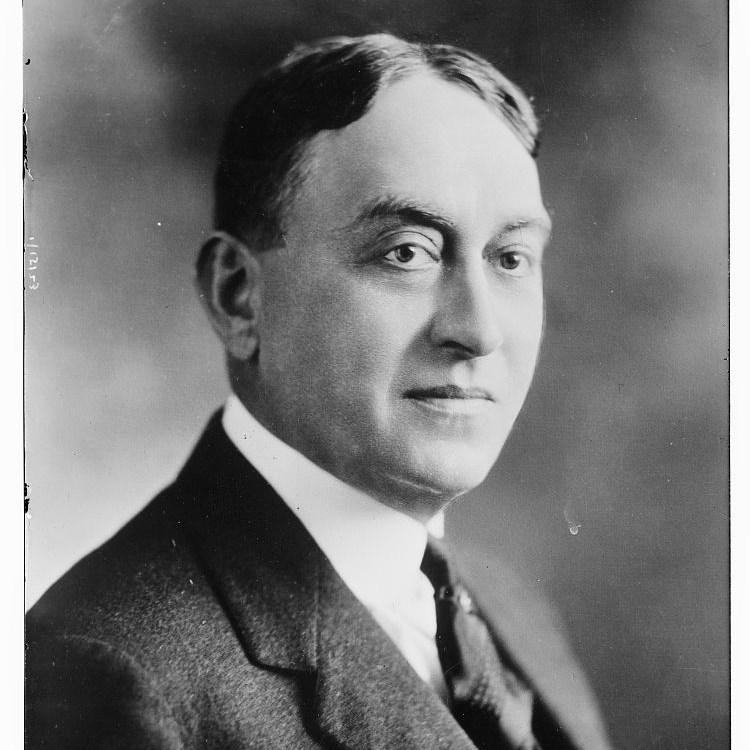 George S. Silzer. Image from the Library of Congress.
George Sebastian Silzer served as the 38th Governor of New Jersey from 1923 to 1926. He was born in 1870 and raised by Christina and Theodore Silzer in New Brunswick. As governor, he proposed regulations on public utilities, sought to create protective labor legislation, made efforts to expand public welfare, and pushed to place strict controls on pollution, firearms, and narcotics. He also supported road building and a federal anti-lynching law, but not much of his legislation passed. Some proposals he backed, like the Delaware River Port Authority and the George Washington Bridge, were eventually completed.
On November 3, 1925, the gubernatorial election took place. Arthur Harry Moore took 51.87% of the vote, defeating Arthur Whitney. Arthur eventually served three non-consecutive terms as governor and was also a U.S. Senator for New Jersey.
Who Won Miss America in 1925?
In 1925, the fifth Miss America pageant was held in Atlantic City. Miss America is an annual competition where women between 18 and 28 compete and are judged on physical fitness, modeling, and interview questions. The winner was Fay Lanphier of California. Contestants from New Jersey included Francis M. Glowaski of Jersey City, Helen Corcoran of Newark, and Lee Bartlett.
What Was Not Around in 1925?
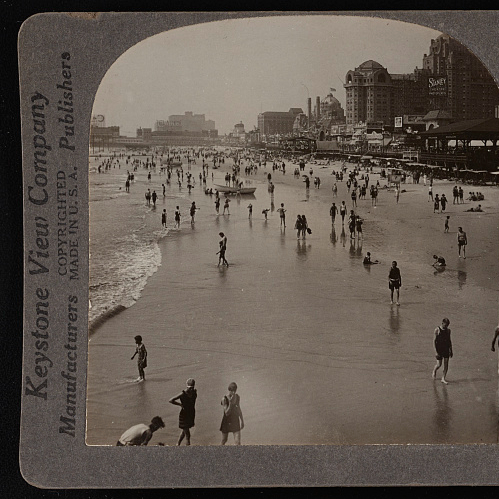 Atlantic City in 1925. Image from the Library of Congress.
While 1925 was a century ago, many things in New Jersey still did not exist. Someone living in Atlantic City, Hoboken, or Trenton had different transportation options compared to today. Newark Liberty International Airport, the Garden State Parkway, NJ Turnpike, Atlantic City Expressway, the Holland Tunnel, and the George Washington Bridge were not open yet. New Jerseyans relied more on buses, trains, and even horses in some areas to get around. International travel, especially to Europe and other continents, was accessible by ship.
Newark Liberty International Airport opened in 1928, becoming the first commercial airport in America and the first with a paved airstrip. Two years later, it became the nation’s first airport with an air traffic control tower and airport weather station. It was also the first airport to allow nighttime operations in 1952. Construction on the Garden State Parkway began after World War II in 1946, displacing homes and even train stations. For example, dozens of homes and the Walnut Street Station in Bloomfield were demolished to make way for the Garden State Parkway. In 1949, work began on the NJ Turnpike with the creation of the Turnpike Authority. Like the Garden State Parkway, the Turnpike demolished homes and cut through farms like those of the Campbell, Hancock, and Zaitz farms in East Windsor. The Atlantic City Expressway, which stretches across South Jersey, was completed in 1964.
The George Washington Bridge and the Holland Tunnel are popular terms in New Jerseyans’ 2025 lexicon, but back in 1925, both of these highly trafficked routes to Manhattan were not even open yet. The George Washington Bridge was first proposed in 1906 and finally opened in 1927. However, it was not until 1925 that the state legislatures of New York and New Jersey voted on the planning and construction of it. Construction on the Holland Tunnel started in 1920, and it opened in 1927.
Some communities, like Fairfield in Essex County, East Hanover and Parsippany–Troy Hills in Morris County, Wyckoff in Bergen County, Watchung in Union County, and South Plainfield in Middlesex County, did not exist. Some of these communities were neighborhoods or sections of existing towns, but for official purposes, none of them were municipalities with a mayor or government yet. For example, Fairfield was formed in 1963, but before this, it was part of Caldwell. In 1904, West Caldwell separated from Caldwell, and for almost 50 years, Caldwell was split into two communities that did not border one another.
See More: A Millennial Girl’s Guide to the Jersey Shore
Follow @thelocalgirlhq on Instagram + TikTok for the latest updates on Hoboken, Montclair, Bergen County, and more, sign up for our weekly newsletter here that shares everything you missed each week, and check out our events calendar, which has over 100+ events weekly to peruse.